
Task management apps help teams assign work, set deadlines, and see what needs attention. The right choice depends on whether you need a shared checklist, structured project planning, meeting follow-up, or a custom workflow.
This comparison covers 10 options, their useful features, trade-offs, integrations, and pricing models. Start with your team's process, then test a real project before moving all your work.
Quick answer
Choose the task management app that fits how your team works and the controls it needs.
- Start with task owners, due dates, priorities, and a shared view of progress.
- Test recurring work, approvals, files, and integrations using a real team project.
- Compare free-plan limits and the cost of the paid features you will actually use.
- Choose a configurable platform when a standard workflow cannot support your data or permissions.
- Ask the people doing the work and the administrator to test the same workflow.
Compare the 10 options
The fit descriptions below are selection guidance, not a universal ranking. Pricing pages describe the current plans and limits; exact charges depend on the chosen tier, billing cycle, and usage.
| Solution | Useful starting point | Check before choosing | Pricing model and source |
|---|---|---|---|
| Fliplet | Custom checklists and task workflows | Configuration effort, publishing, integrations, and access requirements | Credit-based plans and Enterprise options. Plans |
| Basecamp | Tasks, files, and project communication together | Active projects, storage, and user allowances | Free and fixed-price paid packages. Plans |
| Todoist | Shared task lists and personal task organization | Team workspace, reminders, and required views | Free, Pro, and Business subscriptions. Plans |
| Monday.com | Configurable boards and team workflows | Seats, reporting, and automation allowances | Free and seat-based paid tiers. Plans |
| ClickUp | Tasks alongside documents and project views | Permissions, feature allowances, and add-ons | Free and paid workspace plans. Plans |
| Fellow | Meeting notes and follow-up action items | Meeting allowances and connection to project tracking | Free and per-user paid tiers. Plans |
| Airtable | Task tracking built around structured records | Data design, editor seats, and record limits | Free and paid seat-based tiers. Plans |
| Hive | Team tasks and multiple project views | Required views, integrations, and add-ons | Free, Starter, Teams, and Enterprise. Plans |
| Asana | Project tasks and coordinated team work | Team size, planning views, and administration | Free Personal and paid team tiers. Plans |
| Trello | Shared cards and boards | Collaborator limits, reporting, and Power-Ups | Free and per-user paid tiers. Plans |
Useful starting point
- Fliplet
- Custom checklists and task workflows
- Basecamp
- Tasks, files, and project communication together
- Todoist
- Shared task lists and personal task organization
- Monday.com
- Configurable boards and team workflows
- ClickUp
- Tasks alongside documents and project views
- Fellow
- Meeting notes and follow-up action items
- Airtable
- Task tracking built around structured records
- Hive
- Team tasks and multiple project views
- Asana
- Project tasks and coordinated team work
- Trello
- Shared cards and boards
Check before choosing
- Fliplet
- Configuration effort, publishing, integrations, and access requirements
- Basecamp
- Active projects, storage, and user allowances
- Todoist
- Team workspace, reminders, and required views
- Monday.com
- Seats, reporting, and automation allowances
- ClickUp
- Permissions, feature allowances, and add-ons
- Fellow
- Meeting allowances and connection to project tracking
- Airtable
- Data design, editor seats, and record limits
- Hive
- Required views, integrations, and add-ons
- Asana
- Team size, planning views, and administration
- Trello
- Collaborator limits, reporting, and Power-Ups
Pricing model and source
- Fliplet
- Credit-based plans and Enterprise options. Plans
- Basecamp
- Free and fixed-price paid packages. Plans
- Todoist
- Free, Pro, and Business subscriptions. Plans
- Monday.com
- Free and seat-based paid tiers. Plans
- ClickUp
- Free and paid workspace plans. Plans
- Fellow
- Free and per-user paid tiers. Plans
- Airtable
- Free and paid seat-based tiers. Plans
- Hive
- Free, Starter, Teams, and Enterprise. Plans
- Asana
- Free Personal and paid team tiers. Plans
- Trello
- Free and per-user paid tiers. Plans
Test one team workflow
Run the same small trial in each shortlisted tool: prepare a monthly client report, have a manager approve it, and track any overdue work. This is a suggested buyer test, not a claim that we tested every product or that each supports every step.
- Assign the work. Create the report task, give it an owner and due date, attach a sample file, and set a recurring action for the next month.
- Request approval. Have a second person review the file and request a correction before approving it. Check whether the tool records the decision or relies on an informal comment.
- Find what is late. Leave one test task overdue. Ask the manager to find overdue work by owner and report its status without rebuilding the list in a spreadsheet.
- Check the handoff. Complete a task on the devices your team uses and test one required calendar, email, or chat connection. Check whether changes synchronize or need manual copying.
For each step, record whether it works in the selected plan, needs configuration or an add-on, or cannot meet the requirement. Include setup time and the person who will maintain it. If a ready-made tracker passes your essential steps, custom development may add unnecessary work. If your approval rules or data structure do not fit, use the same brief to evaluate a configurable task management solution.
Platform profiles
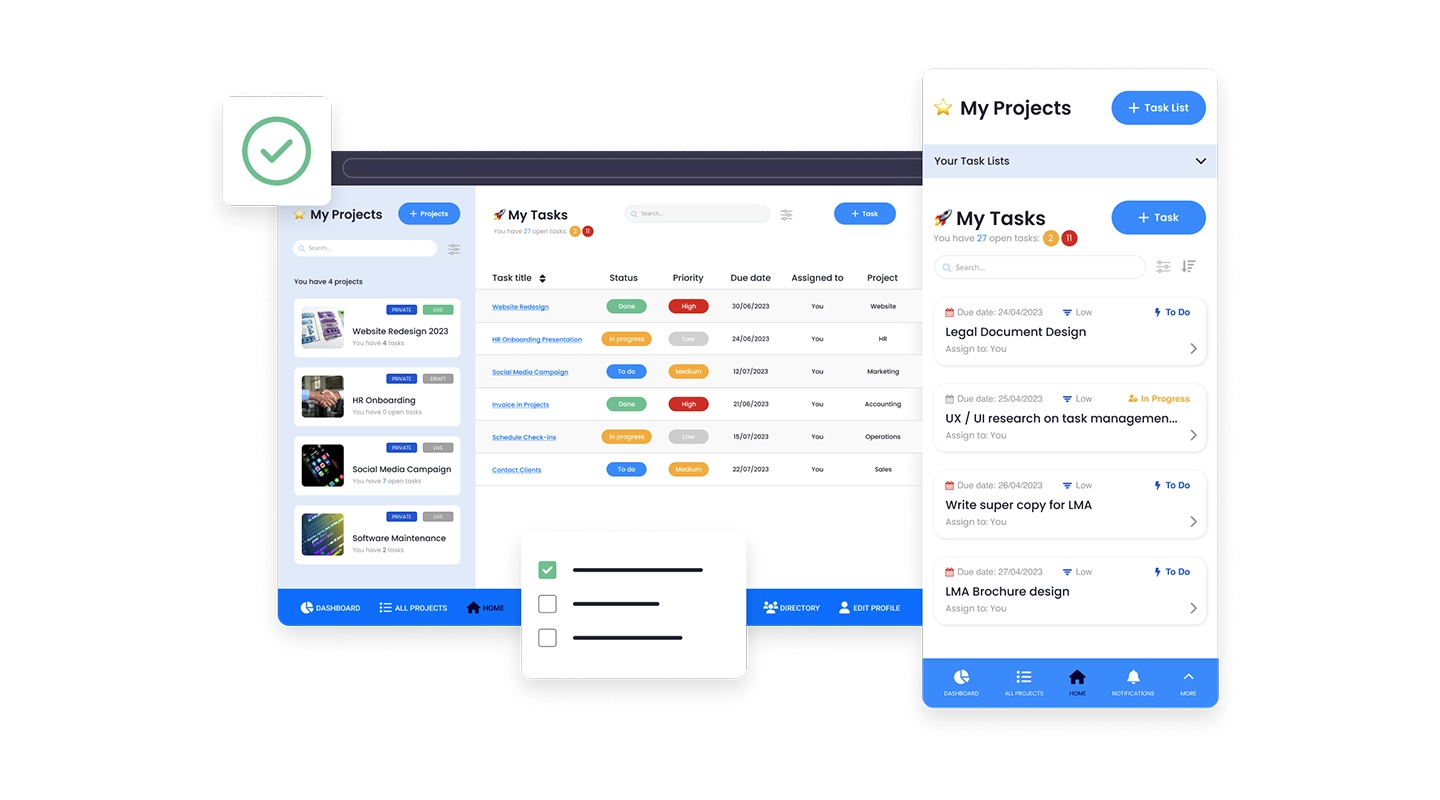
Analysis
Fliplet lets a team configure a task workflow around its own records, roles, and publishing needs. Start with the Task Management solution, then test whether its approval, reporting, and integration requirements fit the platform and plan.
Key Features
- Configurable task lists, owners, due dates, tags, and priorities
- Web and mobile delivery options to confirm for your plan
- Access and integration settings for the workflow you build
Differences Between Free And Paid Versions
Fliplet’s free plan is for prototyping. Paid plans add publishing and capacity, while Enterprise offers custom integrations and dedicated support. Check the current plan comparison against your deployment requirements.
Pros
Useful when a fixed tracker cannot represent the team’s approval rules or data structure. Business users can shape supported screens while technical owners review permissions and connections.
Cons
A custom task solution needs configuration and testing. Confirm the publishing, support, and integration plan before rollout.
Integrations
Review Fliplet integration options for the system that owns your task data. Test authentication, update direction, failure handling, and plan requirements.
Price
Free prototyping and credit-based paid plans; production publishing and enterprise services depend on the plan. See the official pricing page for current terms.
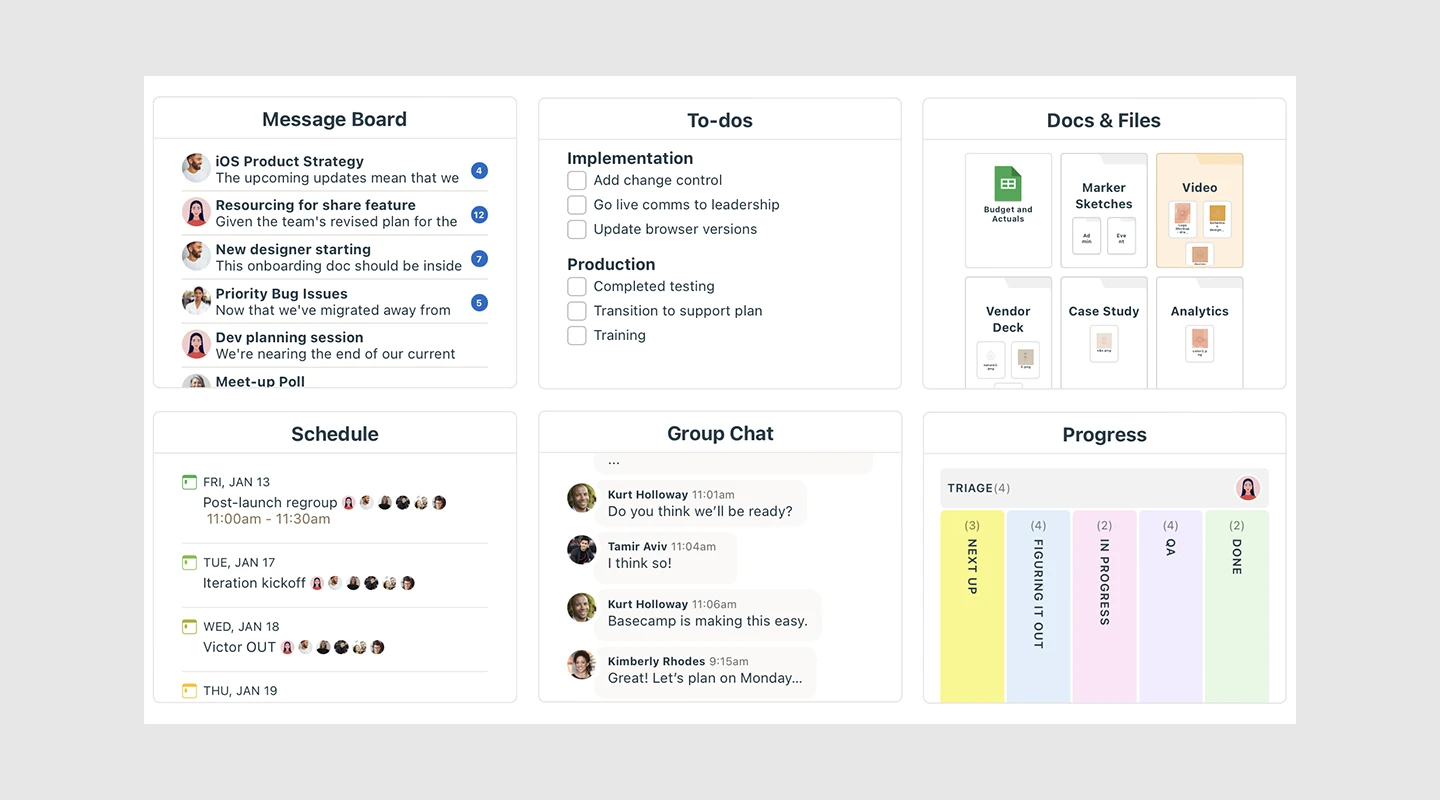
Analysis
Basecamp keeps to-dos, project messages, schedules, and files together. It fits teams that want the work and its discussion in one project space; test approval and reporting needs separately.
Key Features
- To-do lists with assignees and due dates
- Project message boards and schedules
- Files attached to project work
Differences Between Free And Paid Versions
Basecamp now offers a free plan with one project and up to five users. Paid packages increase project and storage capacity; Studio and higher include unlimited users. See the current package comparison.
Pros
Its project space keeps tasks, files, and conversations close together. Fixed-price packages may simplify budgeting when the included project and user limits fit.
Cons
Choose a package around active projects, storage, and users. Check that its task workflow covers your reporting and approval needs.
Integrations
Check Basecamp’s integration directory for the connection you need and test how it updates a task or project.
Price
Free plan and fixed-price paid packages, with project, storage, and user allowances. See the official pricing page for current terms.

Analysis
Todoist starts with fast personal task capture and adds shared projects for teams. It fits a team that needs clear lists and recurring tasks more than a complex project portfolio.
Key Features
- Tasks, due dates, recurring schedules, and priorities
- Shared projects and task assignment
- Team workspace on the Business plan
Differences Between Free And Paid Versions
Beginner provides personal projects and core task features. Pro expands personal capacity; Business adds a shared team workspace, team roles, and centralized billing. See Todoist’s plan comparison.
Pros
Fast task capture and clear personal lists can help when individual work and shared commitments need to stay connected. Test the team workspace with the people who will use it.
Cons
Separate personal task needs from shared team administration. Verify which reminders, views, and workspace controls your chosen plan includes.
Integrations
Use Todoist’s integration directory to check your calendar, email, or chat connection. Confirm whether changes flow both ways.
Price
Free Beginner plan; Pro and Business subscriptions. See the official pricing page for current terms.

Analysis
monday.com uses configurable boards to track tasks, owners, dates, and status. It fits teams willing to design their own views and rules; check seat and automation allowances before choosing a tier.
Key Features
- Boards with owners, dates, and status
- Multiple planning and reporting views
- Automations with allowances that vary by plan
Differences Between Free And Paid Versions
The free work-management plan supports up to two seats. Paid tiers expand capabilities, with automation, integration, reporting, and governance access varying by plan. Check monday.com’s current comparison.
Pros
Boards can make ownership and current status visible. Use the trial to see whether the chosen view still works when several projects and teams are involved.
Cons
Account for seat requirements and automation or integration allowances. Test the reporting view you need before selecting a tier.
Integrations
Check monday.com’s integrations for the exact trigger, action, and plan your process needs.
Price
Free plan; paid work-management tiers priced by seats and billing cycle. See the official pricing page for current terms.

Analysis
ClickUp combines tasks with documents and several project views. It fits teams that want work and supporting material in one workspace, provided they can keep the setup understandable.
Key Features
- Task lists, boards, calendars, and project views
- Documents linked to project work
- Time and workload features with plan-specific allowances
Differences Between Free And Paid Versions
Free Forever supports core task collaboration. Paid plans expand capacity and controls. ClickUp notes that some workspaces see different plan names, so verify the current offer for your workspace in its pricing guidance.
Pros
One workspace can hold the task and its supporting document. Test whether permissions and views remain clear for every team member you plan to invite.
Cons
Compare permissions, usage allowances, and any AI add-ons with the needs of every member you plan to invite.
Integrations
Review ClickUp’s integrations for your required service, then test permissions and what happens when synchronization fails.
Price
Free Forever and paid workspace plans; features and add-ons affect cost. See the official pricing page for current terms.

Analysis
Fellow focuses on meetings, notes, recordings, and follow-up actions. It fits teams whose tasks begin in meetings; compare it with a project tool if work also needs cross-project planning.
Key Features
- Shared meeting agendas and notes
- Action items linked to meeting follow-up
- Recording and AI allowances that vary by plan
Differences Between Free And Paid Versions
Fellow’s plans distinguish meeting-note and recording allowances, team features, integrations, and administrative controls. Compare the current plans for your meeting volume and team size.
Pros
A meeting action can stay beside the decision that created it. Check how that action reaches the system used to manage the rest of the project.
Cons
Fellow centers on meetings and action items. Test how follow-up tasks reach your wider project system if you need portfolio or delivery planning.
Integrations
Check Fellow’s integrations for your project tool and test whether assigned actions and later updates stay connected.
Price
Free plan and per-user Team, Business, and Enterprise plans. See the official pricing page for current terms.

Analysis
Airtable uses linked records and configurable views rather than a fixed task structure. It fits work that needs custom fields and relationships, but someone must design and maintain the data model.
Key Features
- Linked records and custom fields
- Grid, form, and other configurable views
- File attachments and automation allowances
Differences Between Free And Paid Versions
Free supports getting started. Paid plans add capacity and administration; editable access affects billing. Check record, attachment, automation, and integration allowances in Airtable’s plan comparison.
Pros
Teams can represent tasks alongside related clients, assets, or requests. Start with the actual record relationships instead of rebuilding a spreadsheet in a new tool.
Cons
A flexible data model needs someone to design and maintain it. Check editing permissions and usage limits before inviting a wider team.
Integrations
Check Airtable’s integrations for the system you need and confirm who owns synchronization and errors.
Price
Free, Team, Business, and Enterprise Scale plans; paid access is seat-based. See the official pricing page for current terms.

Analysis
Hive combines tasks, project views, files, and team communication. It fits teams comparing several ways to plan and report on shared projects; confirm which views or add-ons the chosen plan includes.
Key Features
- Tasks in project and Kanban views
- Files attached to work
- Reporting and time features to check by plan
Differences Between Free And Paid Versions
Free includes core task and collaboration features. Paid tiers expand project, storage, and workspace capacity; Enterprise adds security, permissions, and support options. See Hive’s current plans.
Pros
Multiple views may help a manager and a contributor see the same work in different ways. Test the view and reporting path your team will actually use.
Cons
Check whether your required views, time tracking, and integrations are included or need an add-on. Test the mobile workflow your team will actually use.
Integrations
Use Hive’s integration directory to confirm your calendar or file connection and any separate service it requires.
Price
Free, Starter, Teams, and custom Enterprise plans. See the official pricing page for current terms.

Analysis
Asana organizes tasks inside projects, with owners, dates, comments, and multiple team views. It fits teams that need project coordination and clearer reporting than a shared checklist provides.
Key Features
- Tasks grouped by project, owner, and deadline
- Comments and files beside the work
- Planning views and automation that vary by plan
Differences Between Free And Paid Versions
Personal is currently for one or two people and includes core task and project views. Paid tiers add team planning and workflow capabilities. Check Asana’s plan comparison for your required views and controls.
Pros
Project structure makes assignments and deadlines visible across a team. Test guest access and the reporting view before rolling it out to clients or several departments.
Cons
Match the plan to your reporting, automation, and cross-project planning needs. Test guest access and team permissions before rollout.
Integrations
Check Asana’s app directory for the exact connection and confirm how updates and permissions work.
Price
Free Personal plan; per-user paid tiers and enterprise options. See the official pricing page for current terms.

Analysis
Trello uses cards that move across boards and lists. It fits a team that can understand its work as a visible sequence; cross-board reporting may need a paid tier or additional tooling.
Key Features
- Boards, lists, cards, assignees, and due dates
- Checklists and card attachments
- Automation and additional views with plan limits
Differences Between Free And Paid Versions
Free supports up to ten collaborators per workspace. Paid tiers add capabilities such as more boards, advanced checklists, additional views, and administration. See the current Trello comparison.
Pros
A board can make the next action and owner easy to find. Test whether separate boards still give managers enough visibility across projects.
Cons
A board can be enough for shared tasks. Check additional views, cross-board reporting, and any paid Power-Ups if you need more structured project planning.
Integrations
Review Trello’s integrations and Power-Ups for your workflow, including any added cost or access requirement.
Price
Free plan and per-user Standard, Premium, and Enterprise tiers. See the official pricing page for current terms.
Choose for daily work
A task management tool gives a team one place to assign work, set dates, see progress, and find the latest decision. The useful feature set depends on the work: a shared checklist needs less structure than a client approval process or a project spanning several departments.
Use the trial above to compare the experience for both the person assigning tasks and the person completing them. Ask them to find an overdue item, locate its latest file, and understand who owns the next step. If the tool makes those ordinary actions difficult, a long feature list will not fix the problem.
| Requirement | Ask during the trial |
|---|---|
| Ownership | Can everyone see who is responsible, who approves, and what happens when the owner is away? |
| Planning | Can the team set due dates, recurring work, priorities, and dependencies without duplicating records? |
| Collaboration | Are files and decisions attached to the work, with access limited to the right people? |
| Reporting | Can a manager find overdue or blocked work without rebuilding a report in a spreadsheet? |
| Integration | Does the connection you need create or update the right record, and what happens when it fails? |
| Cost and control | Are the required permissions, views, automations, and support included in the plan you would buy? |
A clear owner and reliable status matter more than a larger number of views. For client or employee data, ask your security team to review access, retention, and supplier controls before rollout.
Roll out the choice
Start with one repeatable workflow and a named process owner. Import only the tasks and files the team needs, agree how requests enter the system, and set a rule for closing or archiving work. Train people on the handful of actions they will use every week. After a month, compare overdue tasks, missed handoffs, and time spent preparing status reports with the old process. These are measures to collect, not promised outcomes.
If a standard tracker passes the trial, use it. If your approval rules, data structure, or distribution needs do not fit, compare a configurable task management solution with the setup and maintenance it requires. Ward and Smith's case study shows how non-technical colleagues maintained content in a deployed application; it is an ownership example, not a task-management result.
Evaluate AI features
AI may help capture meeting actions or draft task descriptions. Check the output for missing context, incorrect owners, and dates before assigning work. Separate those features from ordinary rules for recurring tasks, reminders, and status changes. Fellow and Todoist describe different AI allowances, so compare the plan you would use and review who can access the underlying meeting or project information.
Keep the trial findings, process owner, and rollout measures with your decision so the team can revisit it when its work changes. Book a Demo with the approval, reporting, or integration gaps you need to resolve.

Lisa Broom is the Head of Marketing at Fliplet, where she helps enterprise teams turn complex workflows into secure, user-friendly digital experiences.

Ready to see Fliplet live?
Build the software you actually need.
Book a demo to walk through your workflow goals, governance requirements, integration needs, and rollout model.